

Piston ring
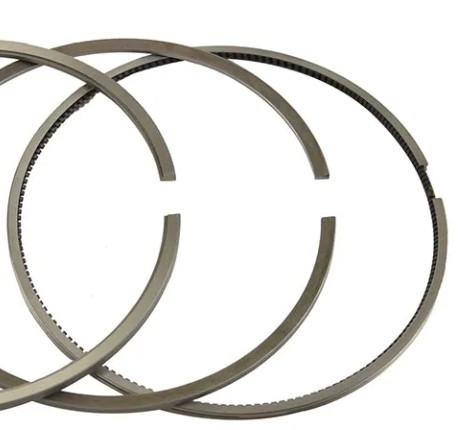
Piston rings are essential components of a piston, playing a crucial role in the efficient operation of the engine. They prevent the mixing of engine oil and combustion byproducts, and are also important for piston cooling by transferring heat from the piston to the cylinder wall. These thin metal rings fit into ring grooves on the side of the piston and perform three fundamental functions: sealing the combustion chamber, conducting heat, and regulating oil lubrication. Piston rings are generally classified into two main types: 1. Compression rings are responsible for sealing the combustion chamber, preventing gases from escaping through the gap between the piston and the cylinder. 2. Oil control rings regulate the amount of oil, removing excess from the cylinder wall while leaving a thin film of oil to ensure lubrication. Piston rings are typically made from cast iron or special steel alloys to withstand high temperatures and wear. To minimize wear and ensure better friction coefficients, the rings are coated with a hard material (such as chromium or molybdenum) through various surface treatment processes. Over time, however, the rings can wear out, leading to reduced engine performance and increased oil consumption. Signs of this can include blue smoke or low compression.