

Function of pistons
Everything you need to know about the function of pistons!
Anyone familiar with internal combustion engines has surely heard of pistons and their role in the engine. If you want to delve deeper into the intricacies of how pistons work, read our article below.
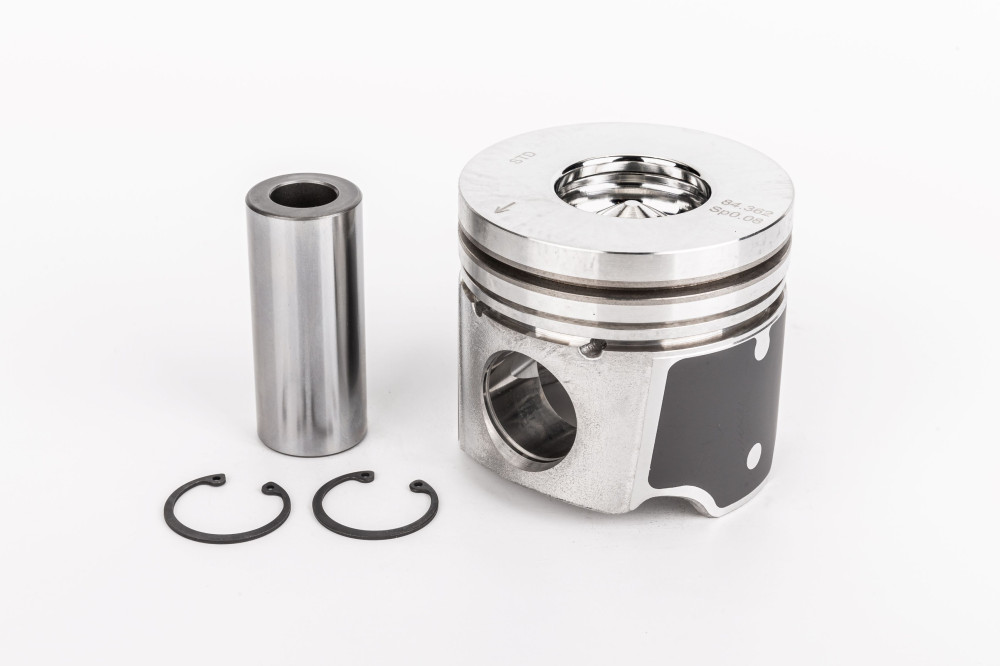
The Function of Pistons
Pistons play a crucial role in the operation of internal combustion engines. Drawing a human parallel, we could call them the heart of the engine. They perform continuous work, transmitting the energy released during combustion to the crankshaft.
Pistons themselves are part of the combustion chamber, which is sealed from below by the piston and from above by the cylinder head. The working cycles of four-stroke Otto (gasoline) and diesel engines – intake, compression, combustion, and exhaust – take place in the combustion chambers, during which the pistons transfer pressure to the crankshaft, thus converting linear motion into rotational motion.
In Otto engines, the upward movement of the pistons compresses the air-fuel mixture, which is ignited by the spark plugs near the piston's top dead center. In a fraction of a second, immense pressure and heat are released, pushing the piston down the cylinder. Due to the high pressure and enormous heat generation, the components are subjected to extreme stress. Modern Otto engine pistons must withstand a maximum pressure of 180 bar at combustion temperatures of 2000 °C, while the piston crowns can reach temperatures of up to 350 °C.
During combustion, pistons convert the generated pressure into linear motion, and this linear motion is indirectly converted into rotational motion. This happens because the pistons are connected to the crankshaft via connecting rods. The connecting rods are perfectly vertical only at the top and bottom dead centers, meaning their angle relative to the direction of motion constantly changes during their movement. This results in lateral forces acting on the pistons, pressing them against the cylinder wall. While the piston is simultaneously pulled and pushed, its speed also constantly changes during its movement, leading to further mechanical stress.
Piston Material
For longevity, pistons must be durable and, to improve efficiency, lightweight. Furthermore, their material must withstand high temperatures, be wear-resistant, and strong. Consequently, pistons are typically made from aluminum alloys.
However, steel pistons are increasingly used in modern diesel engines. The use of steel pistons is justified by steel's superior heat resistance and strength compared to traditionally used aluminum. As modern diesel engines operate under higher pressures and temperatures to increase efficiency, steel pistons better withstand these extreme conditions. Steel pistons also exhibit less thermal expansion, allowing for more precise tolerances, thereby improving engine performance and lifespan. Due to their compact size, steel pistons also allow for a lower and smaller engine block, resulting in significant weight reduction.
Our company strives to procure the highest quality pistons, which our manufacturers release after the most stringent quality control. Our range includes pistons for passenger cars, trucks, commercial vehicles, and compressors.