

What is a valve stem seal for?
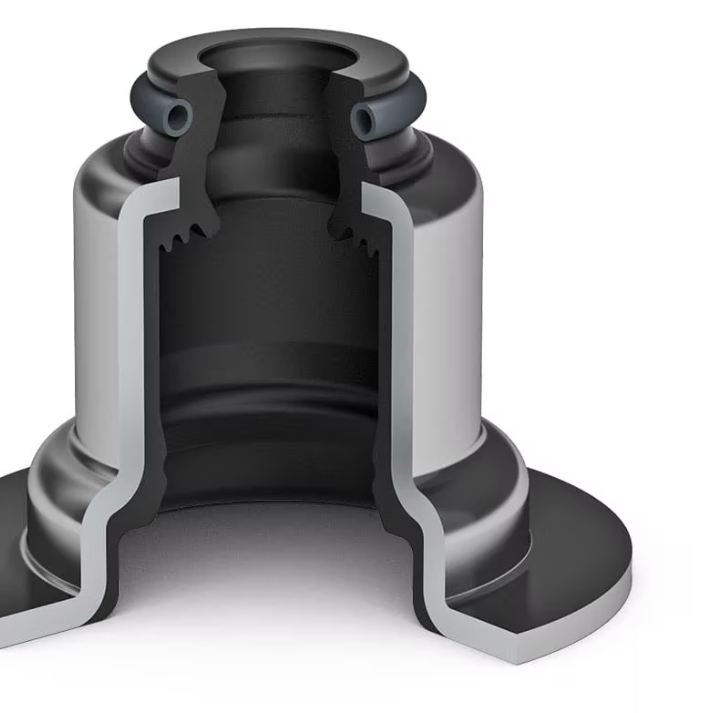
The valve stem seal is a small component in the engine that is essential for the optimal operation of your vehicle. Although it is an indispensable part of the engine, little is said about it. In this article, we have gathered some essential information about valve stem seals.
What is a valve stem seal for?
The valve stem seal is located in the cylinder head on the valve guides. Its function is to prevent engine oil from entering the combustion chamber through the gap between the valve stem and the valve guide in the cylinder head. It is a very small part compared to other seals in the engine. Without valve stem seals made of the appropriate material and with the correct geometric design, engine oil would leak through the valves into the combustion chamber, which could lead to increased oil consumption, poor combustion, and consequently, carbon deposits on the piston crowns and valves.
Valve stem seals also participate in the proper lubrication of the valve stems. The valve stems move up and down in the cylinder head during engine operation and require adequate lubrication to prevent excessive wear. Valve stem seals help create a thin layer of oil around the valve stems, thus reducing their wear. The requirements for valve stem seal components vary based on the design and operating conditions of individual engines.
Properly functioning valve stem seals contribute to the overall efficiency of the engine and the minimization of harmful emissions. If oil leaks into the combustion chamber, it can lead to increased hydrocarbon emissions and negatively affect the composition of exhaust gases.
Valve stem seals are made of high-strength rubber, which is extremely resistant to heat, oil additives, and wear. They are often reinforced with springs, which ensure optimal sealing pressure on the valve stem throughout their lifespan.
The correct installation of the valve stem seal is a critically important task to ensure proper sealing at all times. For the proper functioning of the engine, the valve stem seal must be placed at the ideal height on the valve guide so that it cannot move out of place during engine operation. During installation, it is important to maintain the correct installation height so that the upper surface of the valve guide does not stretch the sealing surface of the seal, as this could also lead to sealing problems.
Types of Valve Stem Seals
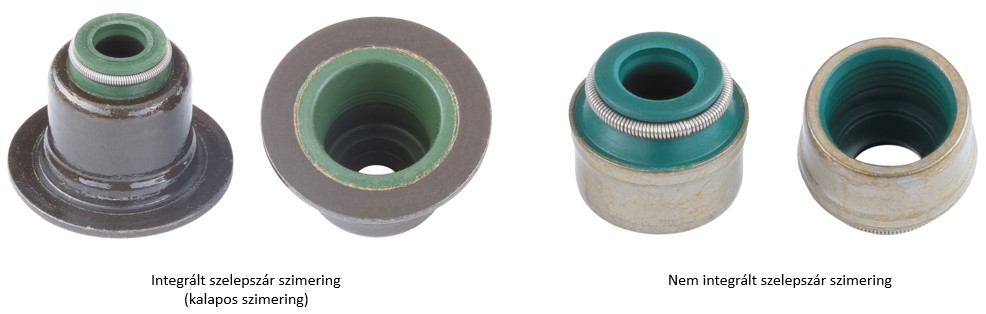
There are basically two types of valve stem seal designs.
One design is the non-integrated seal, which does not have a so-called base (in jargon: hat). This is the simplest construction, whose sole purpose is to ensure proper sealing.
Integrated seals (in jargon: hat seals), however, have a base part, which serves to prevent wear on the valve spring seat in the cylinder head. In this case, the seal surrounds the valve guide, and the base part of the seal rests on a machined surface of the cylinder head.
Some valve stem seals are interchangeable between intake and exhaust valves, but there are engine types where different valve stem seals are used on the intake and exhaust sides, as a material with higher heat resistance is required on the exhaust side.
Signs of Valve Stem Seal Failure
Although valve stem seals are made of highly resistant rubber (e.g., Viton), they can still crack or get damaged.
There are certain phenomena that, when they occur, allow us to infer valve stem seal failure. One of the most common signs is blue smoke coming from the exhaust during cold starts and when accelerating hard. A damaged seal cannot properly seal on the valve stem, allowing oil to drip down the valve stems and valve faces even when the engine is stopped. When the engine is started, blue smoke may come out of the exhaust, indicating that oil has entered the combustion chamber.
In addition, engine oil consumption often increases. If oil leaks to a greater extent, the valve stem seal can no longer regulate oil flow. Burnt oil increases emissions and damages the catalytic converter or particulate filter, thereby reducing their efficiency. The engine's oil consumption can be easily monitored by the car owner by regularly checking the engine oil level.
If you suspect a valve stem seal issue, consult a reliable mechanic who can determine if this component is indeed causing the problem. Replacing valve stem seals begins with disassembling the cylinder head, during which it can also be determined whether the faulty valve stem seal has caused damage to other engine components. There are also tools available for replacing valve stem seals that do not require removing the cylinder head. However, if the cylinder head is not removed during replacement, the condition of other components cannot be checked. For example, if the valve stem seal was indeed the cause of the problems in the engine, carbon deposits often form on the top of the valve faces due to the dripping oil, which should be removed at this time for the engine to operate efficiently.
If you are looking for valve stem seals, you have come to the right place. In our webshop, you can browse valve stem seals for passenger cars, trucks, and commercial vehicles, which you can also search by size.
Browse our valve stem seal selection by clicking on one of the following search methods: