

What is a cylinder head?
The role and function of the cylinder head in the engine.
The cylinder head is the component that seals the engine block. It is one of the most complex structural elements and one of the most stressed parts of internal combustion engines. In this article, we have compiled the most important information about the cylinder head.
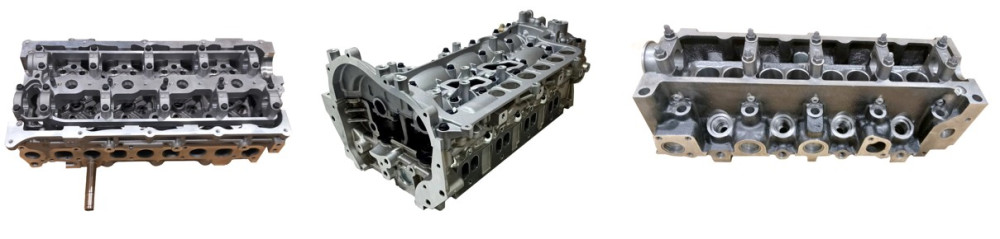
The Cylinder Head
The cylinder head is the element that seals the upper plane of the cylinder block in internal combustion engines. It is one of the most stressed parts of the engine, typically made of cast aluminum in four-stroke modern engines. The cylinder head block contains numerous passages responsible for charge exchange, cooling, or lubricant circulation. The space enclosed by the cylinder head, cylinder wall, and piston is the combustion chamber, so the cylinder head must be resistant to high pressures and temperatures.
The cylinder head block incorporates components necessary for charge exchange, such as the camshaft, valve guides, intake and exhaust valves, injectors for fuel injection, or spark plugs in gasoline engines, and glow plugs in diesel engines. In passenger cars, the design with two camshafts is more common, although the single camshaft design is also frequent, especially in diesel engines. In a single camshaft design, the camshaft lobes are responsible for actuating both the intake and exhaust valves. In a dual camshaft design, one shaft is responsible for actuating the intake valves, while the other is responsible for the exhaust valves. This construction allows for the desynchronization of valve operation on both sides, thus always achieving optimal charge exchange. Cars with modern inline engines have one cylinder head, while V-engine cars have two. Interestingly, some manufacturers have placed the two cylinder banks in a V-engine arrangement so close together that they sealed the cylinder block with a single cylinder head.
Function of the Cylinder Head
The role of the cylinder head is to ensure efficient charge exchange and mixture formation. During charge exchange, air (and in some cases, the fuel mixture) passes through the intake ports to the intake valves, and then through the exhaust valves, exhaust gases leave the combustion chamber through similar passages. For the smooth operation of the engine, it is important that the intake and exhaust valves open and close at the appropriate times.
Cooling is essential to maintain the cylinder head at its operating temperature, so the cylinder head also contains passages for the circulation of coolant. The cylinder head absorbs a significant portion of the heat generated by the engine, therefore it must withstand high thermal and mechanical stress while maintaining its shape for proper sealing. At excessively high temperatures, the strength of the cylinder head decreases, or stresses caused by temperature differences can lead to deformation or permanent damage to the cylinder head block. For this reason, it is usually made of aluminum, which is a material with higher thermal conductivity and is lighter.
Lubrication of moving parts is essential for long service life. The oil pump located in the engine block also delivers lubricant to the passages in the cylinder head, where, among other things, the lubrication of the camshaft journals is achieved through plain bearings embedded in the cylinder head.
Although the cylinder head fails less often than other engine components, it can still happen that a car has a